International Centropa Project – “Walk a day in your shoes …”
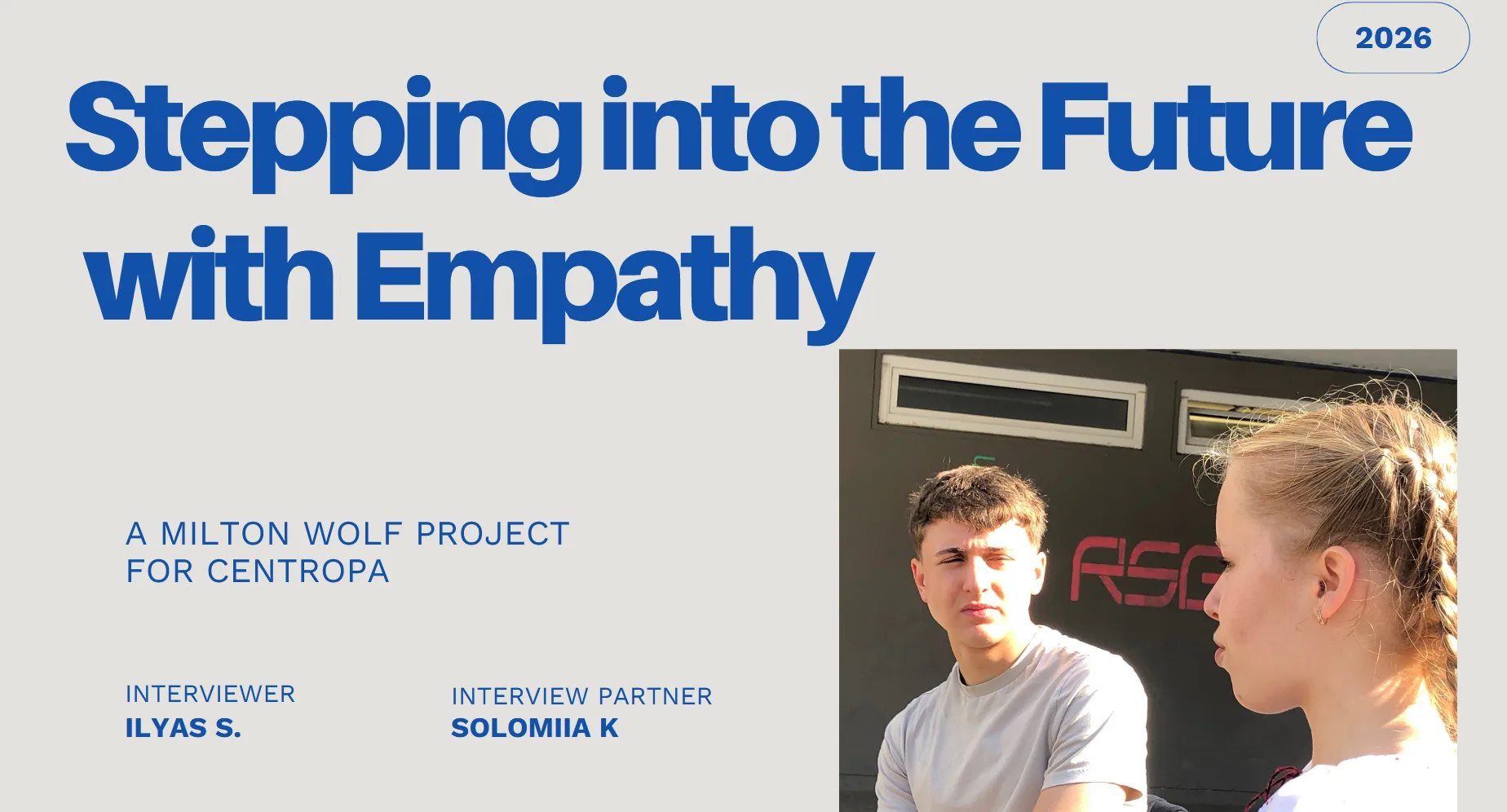
“Do you like Germany?”, “What was the first German dish you ate?”, and “Why did you choose Germany as your host country?”—these and other questions are asked by Ilyas Sönmez to his classmate Solomiia Kravchuk.
And Solomiia shares: about her hometown of Kyiv, about the cathedral near her parents’ house, that they couldn’t find accommodation in Poland and had to continue on to Germany, about her cat that accompanied her on the long journey, about the warm welcome in Hattingen, and that at first she found it strange to have to press a button to cross the street. And how grateful she is for the many forms of help they have received in Germany.
Well prepared and knowledgeable about Solomiia’s home country, Ukraine, Ilyas listens, asks follow-up questions, and has her show photos of Kyiv. He doesn’t talk about himself; instead, he listens closely and wants to understand Solomiia’s path.
Solomiia wore her vyshyvanka, her blouse with traditional embroidery, and talked about the importance of memories and tradition for her. Then she looks to the future. She doesn’t know when she will be able to return to Ukraine. The longing for her father is immense. But perhaps she will someday move to yet another new country. She wants to see much more of the world.
During the interview, classmates photographed both of them and highlighted important statements from Solomiia. They are no longer passive learners; instead, they design, arrange, and curate. They give Solomiia’s experiences a voice.
This interview is part of the international Centropa project “Stepping into the Future with Empathy.” Learning groups from nine countries (Moldova, Poland, North Macedonia, USA, Lithuania, Israel, Greece, Ukraine, Germany) engaged in dialogue: about flight and new beginnings, about hopes, and about “hidden stories.” The American teacher Gili Sherman initiated this project and thoroughly trained the teachers in advance through several video conferences.
From Germany, Solomiia (Grade 9a) and Ilyas (Grade 9b) from our school took part in the project. On Sunday (3/5/26), they presented it in an international video conference with teachers and students and received high praise for it.
Other presentations included a trinational project on childhood then and now; an interview with a 101-year-old refugee from Ukraine (“A living history book”); encounters at the Lost Shtetl Museum in Lithuania; exhibitions with photos and quotations; and more.
During the final discussion, it quickly became clear that this project is a win-win situation for everyone involved. The interviewers gained understanding for the other’s experiences—perhaps even emotional empathy: they understand the other’s fears, hopes, and strengths. And preparing the presentation calls for creativity and visual storytelling.
A single conversation certainly doesn’t change the world, but it helps foster mindfulness and mutual understanding.
For further information, please refer to the article published by Ruhrkanal: https://ruhrkanal.news/realschule-gruenstrasse-ist-teil-eines-internationalen-projekts/
Ms. Nockemann, Ilyas Sönmez, Solomiia Kravchuk